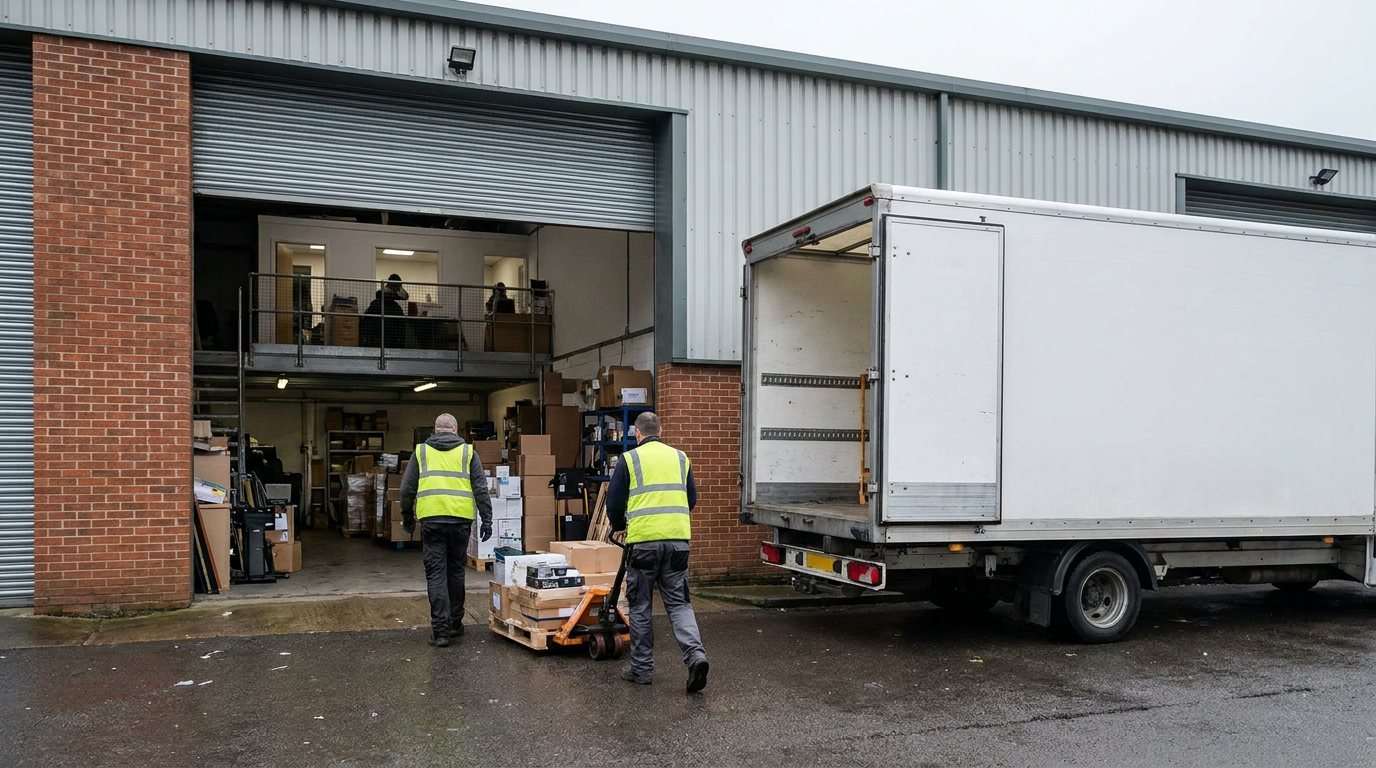
Thetford sits on the Norfolk–Suffolk border beside Thetford Forest, and its industrial estates are home to a wide mix of small manufacturers, trade businesses, workshops and distributors. Many firms move from one unit to another as they grow or shrink, sometimes only a short distance away. A short journey does not make the job simple, though. Moving a working unit means shifting machinery, stock, racking and office space at once, often while trying to keep orders going out.
Survey both units properly
Before setting a date, walk through the old and new premises with a tape measure and a notebook. Record roller-shutter and personnel door widths, floor loadings, ceiling heights and where power supplies and three-phase sockets are located. Check whether the yard allows a van or lorry to get close to the doors and whether neighbouring units share the access road.
Draw a simple plan of the new unit showing where machinery, racking, workbenches and the office area will go. Put the heaviest items nearest the loading door if you can, and leave clear walkways for safe working.
Mixed office and storage space
Many units combine a small office or mezzanine with a larger workshop or warehouse floor. These areas have different needs. The office side involves desks, filing, computers and phones, along with confidential paperwork that should travel in sealed, labelled boxes. The workshop side involves tools, parts and finished goods, which are best packed and labelled by bay or shelf so they can be put back in the same order.
Treating the two areas as separate mini-moves, each with its own list and labelling, usually makes the job easier to manage on the day.
Machinery, racking and stock
Heavy or specialist machinery may need disconnection by an electrician or engineer and moving by a specialist firm with lifting equipment. Get advice early and build any reinstallation and testing time into the plan. Pallet racking should be dismantled, checked for damage and reassembled to the manufacturer’s guidance, rather than rebuilt by guesswork.
For stock, a full count before the move is worthwhile. Run stock levels down where possible, sell or clear slow-moving lines and dispose of damaged goods. Moving less is cheaper and quicker, and it gives you a clean start in the new unit.
Keeping trade going during the move
Few businesses can afford to close for long. Consider these steps to reduce disruption:
- Schedule the main move over a weekend or a quieter trading period.
- Build up a small buffer of finished stock before the move to cover orders.
- Move the office and phones last, or arrange call forwarding, so customers can still reach you.
- Tell suppliers and couriers your new unit number and delivery instructions well in advance.
- Update your address on invoices, your website and online maps.
Choosing a local firm for the general move
For desks, filing, IT equipment, stock and general workshop contents, a local removals team can handle the bulk of the work while specialists deal with any heavy machinery. J.B. House Clearance & Removals is one family-run firm covering Norfolk and Suffolk that carries out commercial and office moves, including dismantling office and shop furniture and moving IT equipment, stock and confidential paperwork. Because the firm also runs business clearances and a separate waste service, a business arranging Thetford office removals can ask about clearing unwanted material from the old unit as part of the same job. The firm states that it is fully insured, with goods in transit, public liability and employer’s insurance.
Handing back the old unit
Check your lease for dilapidations or reinstatement obligations before you go. You may need to remove fixtures you installed, clear waste and return the unit in an agreed condition. Leave enough time for this, photograph the empty unit and return all keys and fobs promptly.
Moving between units on an industrial estate is often the right step for a growing or changing business. With careful measurements, clear labelling and sensible timing, the new space can be working properly within days rather than weeks.