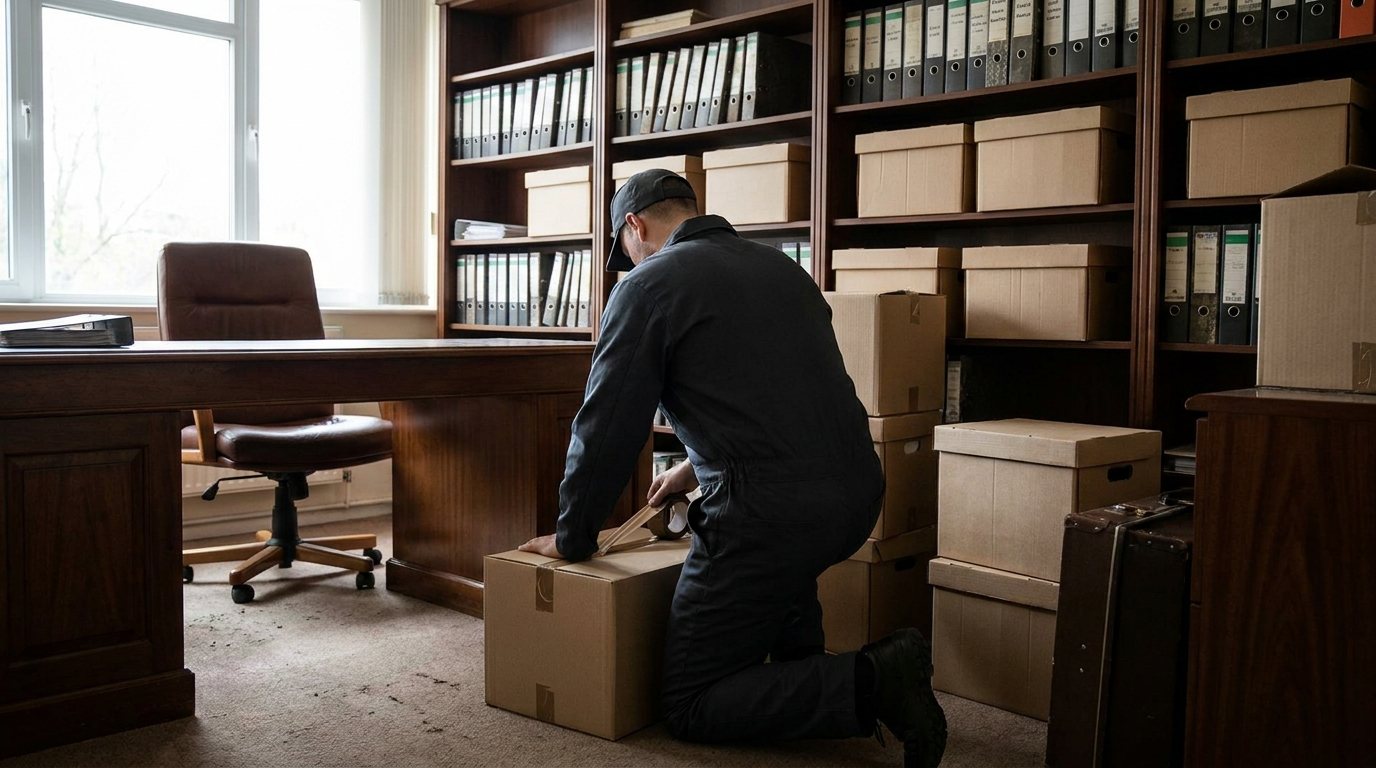
When a professional practice changes premises, the boxes contain more than furniture and stationery. Solicitors, accountants, surgeries and similar firms hold files that clients have entrusted to them, and the move has to protect that trust as carefully as it protects the desks and computers. Shrewsbury has a long tradition of professional offices in its period buildings, and many practices that move are leaving older premises for something more practical, or the other way round. Either way, the same principles apply.
Confidential files need a chain of custody
The single most important question for a practice move is simple: at every moment, who is responsible for the client files? Before anything is packed, decide how confidential material will be boxed, sealed, labelled and tracked from one building to the other. Numbered crates or sealed boxes, recorded on a list that is checked at departure and again on arrival, make it easy to show that nothing went astray.
Avoid labels that reveal what is inside. A box marked with a reference number tells a passer-by nothing; one marked with a client’s name tells them far too much. Keep the key to your numbering system with a named member of staff, not taped to the boxes.
Review your archives before they travel
Most practices hold years of closed matters, old accounts and historic records. A move is a natural moment to check them against your retention policy and your professional body’s guidance, so that files due for secure destruction are dealt with properly rather than carried to a new home. Material you must keep but rarely consult may not need prime space in the new office at all.
Off-site archive storage is one option, provided you can retrieve a file when a client or regulator asks for it. Whatever you choose, record where each archive box has gone.
Protecting digital records as well as paper
Client data lives on servers, laptops and practice-management systems as much as in filing cabinets. Make sure recent backups exist and have been tested before any equipment is disconnected. Laptops and portable drives should be encrypted and travel with staff or in sealed crates, never loose in a vehicle. Agree with your IT provider who disconnects, transports and reconnects each piece of equipment.
Keeping clients and appointments on track
For a surgery or a busy firm, clients cannot simply be told to come back next week. Look at the diary well ahead and choose a move window that avoids deadlines such as completions, hearings, tax return periods or clinic sessions. Many practices move over a weekend so that the doors close on a Friday and reopen on a Monday.
- Redirect phone lines and post before the move, not after
- Update letterheads, email signatures and engagement letters
- Tell clients with appointments due how to find the new premises
- Check the new reception and interview rooms offer proper privacy
Choosing a remover with the right approach
A practice move suits a remover that treats risk and protection planning as part of the job. Jays Removals & Storage, based in Telford, carries out commercial removals across Shropshire and has experience with Shrewsbury’s historic town-centre properties, listed buildings and premises with limited access, which it plans for in advance. When comparing quotes for Shrewsbury office removals, it is worth asking how filing cabinets and archived documents are handled and whether out-of-hours scheduling is possible. Jays offers evening, weekend and out-of-hours moves, business continuity planning, and short- and long-term business storage including archived document storage.
Ask any prospective remover to walk through your premises, explain how sealed crates will be loaded and unloaded, and confirm how your own staff can supervise the confidential items.
A practice that moves well is one its clients barely notice moving at all. Plan the custody of every file, deal with the archive before it travels, protect the data and fit the move around the diary. Do that, and the first thing clients see is a well-organised new office rather than a firm still searching for their paperwork.